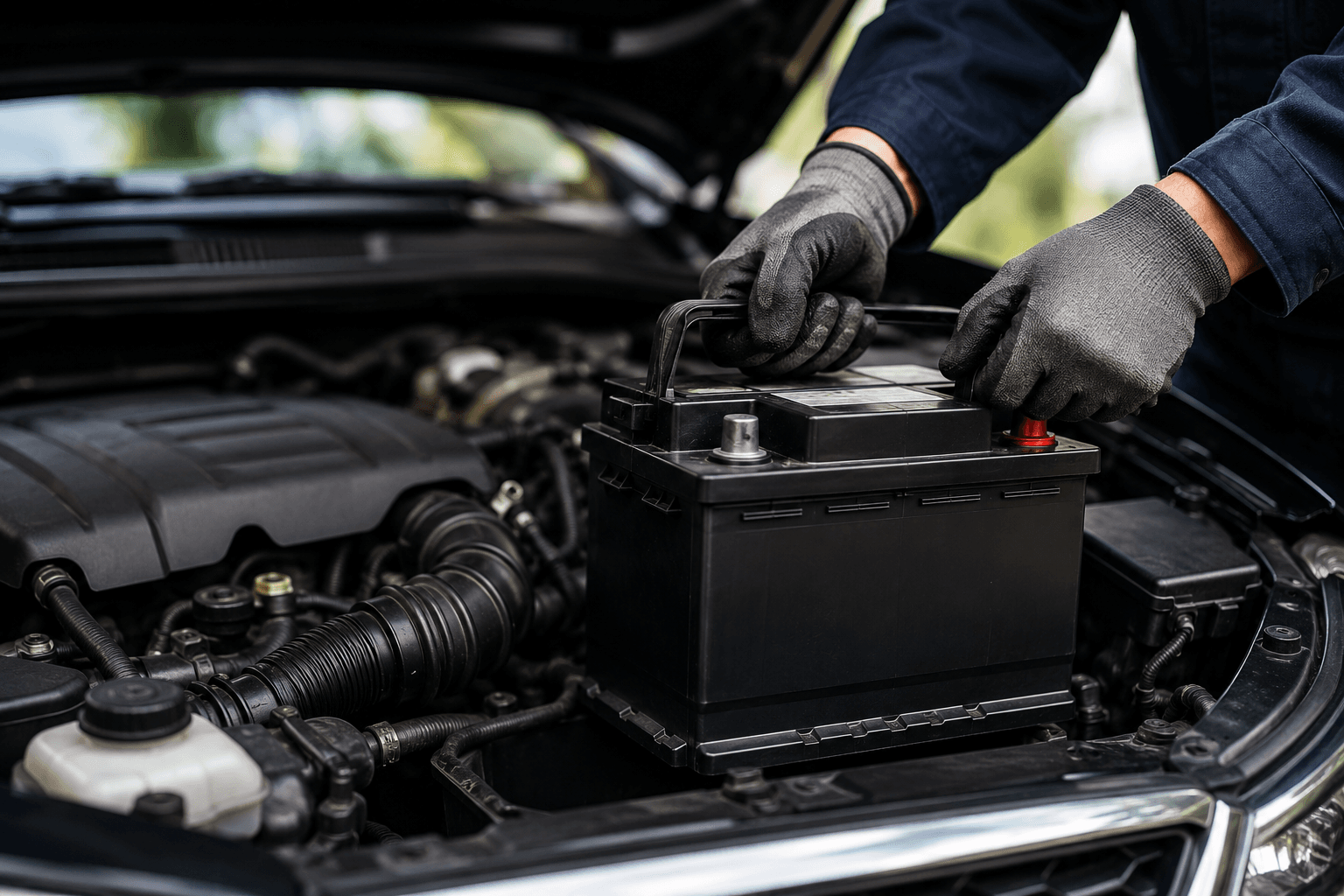
Car Battery Replacement: 7 Proven Warning Signs
Need car battery replacement? Learn 7 warning signs, what they mean, and when to book a trusted mobile mechanic before you get stranded in Melbourne today.
QUICK ANSWER BOX
A failing battery usually shows up as slow cranking, dim lights, warning lights, repeated jump-starts, or corrosion around the terminals. If those symptoms keep coming back, car battery replacement is the safest fix because the battery is no longer holding charge reliably. RACV lists these signs as classic warning signals of battery failure.
INTRODUCTION
Your car usually gives you warnings before the battery dies. The problem is that most drivers miss them until the engine will not start. A weak battery is defined as a battery that can no longer hold enough charge to crank the engine and support the car’s electrical load with confidence. That is why car battery replacement matters before the car leaves you stranded.
Who this is for: drivers who notice slow starts, dim headlights, dashboard warnings, or more than one jump-start in a short time. RACV says the main warning signs include slow cranking, warning lights, dim lights, slow wipers, a silent radio, dead remote locks, corrosion, and swelling around the terminals.
In this guide, you will learn the 7 warning signs, the real causes behind battery failure, how to decide between testing and replacing, and where mobile help makes sense in Melbourne West. The first step is learning what the top symptoms actually mean.
TABLE OF CONTENTS
- What a weak car battery is and why it matters
- 7 warning signs your battery is failing
- What most car battery replacement guides miss
- Why batteries fail faster than drivers expect
- What to do when you notice the warning signs
- Car battery replacement vs jump-starting
- Where Mechanic Near You helps drivers in Melbourne West
- How to make a new battery last longer
What a weak car battery is and why it matters
A weak car battery is defined as a battery that still has some power left, but not enough reliable reserve to start the engine and support normal vehicle electronics every time you turn the key or press the button. That matters because the battery does more than start the car. It also supports lights, locks, the radio, the instrument cluster, and the computer systems that modern cars depend on. Mycar notes that modern vehicles need more than a one-size-fits-all battery, which is why symptoms can appear earlier and feel less obvious than they did in older cars.
The first mistake many drivers make is assuming the battery is either “fine” or “dead.” In reality, batteries usually fail in stages. You may notice a slower crank one week, a dim cabin light the next, and then a no-start morning after that. That slow decline is the best time to act, because a battery that is already fading can leave the alternator, starter, and electrical system under more stress. RACV and NRMA both frame battery help as a practical roadside problem, not just a maintenance item, because drivers often need service when the car refuses to cooperate. If you understand this basic definition, the warning signs make much more sense. The next section shows the seven symptoms that matter most.
7 warning signs your battery is failing
The clearest signs the car battery is dying are slow engine cranking, dashboard battery warnings, dim headlights, repeated jump-starts, electrical glitches, corroded terminals, and a swollen battery case. RACV lists slow cranking, warning lights, dim lights, slow windscreen wipers, a silent radio, dead remote locks, corrosion, and swelling as the key clues.
- Slow cranking. The engine turns over more slowly than usual, especially on the first start of the day. That is often the earliest sign.
- Dashboard battery or charging light. A warning light means the charging system needs attention, not just the battery itself.
- Dim lights and weak electronics. Headlights, interior lights, window motors, and the radio may all feel weaker than normal.
- Frequent jump-starts. If the car needs a jump more than once, the battery is not holding charge properly.
- Clicking instead of starting. A rapid click often means the battery cannot supply enough current to turn the starter.
- Corrosion or swelling. White crust around the terminals or a swollen battery case is a strong warning sign.
- Short bursts of life after charging. If the car starts after a drive or jump-start but fails again soon after, the battery is close to the end.
These symptoms are not random. They are the battery’s way of saying the reserve power is gone. Once you spot two or more of them, the next section becomes more important than guesswork.
What most car battery replacement guides miss
Most current pages for car battery replacement focus on one part of the story. RACV and NRMA make it easy to book replacement help. AutoGuru focuses on prices, ratings, and battery options. Mycar highlights battery selection and installation. Marshall Batteries focuses on 24/7 roadside replacement and nationwide warranty. Those pages are useful, but they do not usually combine symptom diagnosis, charging-system checks, and local service-area clarity in one place.
That gap matters because a weak battery can look like a starter fault or an alternator problem. A driver who only reads a price page may miss the real cause. A driver who only reads a symptom list may still not know whether to test, charge, or replace. This article closes that gap by giving you the decision path in plain language.
The better way to think about it is simple: symptom first, test second, replacement third. That sequence saves time and prevents guesswork. It also helps when you call a mobile mechanic, because you can describe the problem clearly and get the right fix faster. The next section explains why batteries fail in the first place.
Why batteries fail faster than drivers expect
Battery failure usually comes from age, short trips, heat, cold, corrosion, parasitic drain, or a charging problem. A battery is a bit like a water tank with a small leak. If you keep topping it up with short drives, it may look full for a while, but it never truly recovers. That is why school runs, stop-start commuting, and long periods of sitting can wear a battery down faster than drivers expect.
Climate also matters. Adelaide reporting in 2025 showed that a cold snap caused hundreds of battery failures in one morning, which fits the basic chemistry of lead-acid batteries. Cold weather slows the reactions inside the battery, and weakened batteries fail first.
Modern vehicles also place more demand on the battery. Infotainment screens, sensors, cameras, electric parking brakes, and multiple control modules all draw power. Mycar’s battery guidance makes the same point by noting that modern vehicles need a more tailored battery choice, not a generic one.
A worn alternator, dirty terminals, or repeated deep discharges can push the battery over the edge. That is why a car may seem fine one day and then refuse to start after a single cold night or a week of short trips. The root cause is not always dramatic. Often, it is simple wear that has been building for months. The next section shows what to do before the car leaves you stuck.
What to do when you notice the warning signs
When you see battery warning signs, act in this order: test, inspect, then replace if needed. RACV advises drivers with the common warning signs to have the battery tested by a professional, and that is the smartest first move.
- Check the terminals. Look for white corrosion, loose clamps, or a battery case that looks swollen.
- Turn on the car and listen. A slow crank or clicking sound gives useful clues.
- Test the battery and charging system. A proper test can separate a weak battery from a failing alternator or starter.
- Decide fast if the symptoms repeat. If the car needs repeated jump-starts, the battery is not trustworthy anymore.
- Replace the battery before a total failure. That is safer than waiting for a no-start morning.
A real-world example helps here. Suppose a driver in Werribee notices slow cranking for three mornings in a row. The car starts after a drive, but it needs a jump-start on the fourth morning. In that case, a test may confirm the battery is already past the point of reliable use. Waiting usually costs more time than replacing it.
The key idea is this: a healthy battery recovers. A failing battery keeps asking for help. That difference leads straight into the choice between jump-starting and replacement.
Car battery replacement vs jump-starting
Jump-starting gives a weak battery enough power to start the car once. Car battery replacement fixes the battery itself when it can no longer hold charge properly. That difference matters because a jump-start is a temporary reset, not a repair. If the battery keeps failing after a jump, the problem is not solved.
Drivers often ask whether a battery is “worth saving.” The answer is direct: a battery is worth keeping only if it still tests well and the failure came from a one-off drain, such as leaving lights on overnight. If the battery fails repeatedly, replacement is the smarter choice. NRMA and Marshall Batteries both position battery service as a fast, practical roadside solution for exactly these situations.
Here is the simplest rule. If the car starts normally after a jump and then behaves normally for a long stretch, the battery may still be serviceable. If the car starts only after rescue, then fails again soon after, the battery is no longer dependable. That is when replacement protects your time, your schedule, and your starter motor.
The next section shows why Melbourne West drivers often prefer mobile help instead of trying to nurse a weak battery home.
Where Mechanic Near You helps drivers in Melbourne West
Mechanic Near You provides mobile mechanic service across Melbourne West, with battery replacement listed among its featured services. The website says the team comes to your home, workplace, or roadside location, and it specifically names Wyndham Vale, Werribee, Hoppers Crossing, Tarneit, Point Cook, and Eynesbury as service areas.
That local coverage matters because a failing battery does not always wait for a convenient time. If the car will not start in the driveway, at work, or outside a shopping centre, mobile help removes the need for towing in many cases. Mechanic Near You also highlights transparent pricing, same-day service when available, and emergency assistance, which makes sense for battery failures that happen without warning.
For local SEO and for real users, this is where the article becomes more useful than a generic symptom list. It gives the driver the diagnosis, the decision path, and the service zone in one place. That is exactly what a driver needs before the car becomes immobile.
How to make a new battery last longer
A new battery lasts longer when the charging system stays healthy, the terminals stay clean, and the car gets enough drive time to recharge fully. The most practical habits are simple. Drive the car long enough to replenish the battery, keep corrosion off the terminals, turn off lights and accessories before shutdown, and test the charging system if the car keeps draining overnight.
- Drive longer when possible. Short trips do not fully recharge the battery.
- Keep terminals clean. Corrosion reduces the battery’s ability to deliver power.
- Check for parasitic drain. A faulty accessory can pull power while the car sits.
- Replace tired batteries early. Waiting for total failure usually causes the worst inconvenience.
- Match the battery to the vehicle. Supercheap Auto and AutoGuru both stress brand and fitment choices, with names such as Century, Exide, and Optima commonly appearing in Australia.
In 2026, drivers benefit most from prevention, not rescue. A little attention saves a lot of roadside stress. That is especially true for vehicles that carry more electrical load than older cars. The battery does its best work when the whole charging system works together.
According to RACV, the most reliable warning signs of battery failure are slow cranking, dashboard warning lights, dim lights, slow wipers, dead remote locks, and corrosion or swelling around the terminals, and RACV advises drivers to have the battery tested by a professional when those signs appear. NRMA and Marshall Batteries also offer mobile battery services, which supports the practical point that battery failure is common enough to require quick roadside help.
Frequently Asked Questions
What are the first signs my car battery is dying?
The first signs my car battery is dying are usually slow cranking, dim lights, and a car that feels weaker when you start it in the morning. The battery often gives smaller warnings before it fails completely. RACV also lists warning lights, slow wipers, dead remote locks, corrosion, and swelling as strong clues that the battery is no longer healthy.
How do I know whether the battery, alternator, or starter is the problem?
The battery, alternator, and starter can share similar symptoms, but the pattern usually tells the story. A battery problem often shows up after the car sits overnight or after repeated short trips. A charging-system test helps separate battery failure from alternator trouble, which is why professional testing gives a clearer answer than guesswork.
What is the best way to test a weak car battery at home?
The best way to test a weak car battery at home is to look for obvious warning signs first, then check whether the car starts slowly again after sitting for a few hours or overnight. That quick check does not replace a proper load test, but it helps you spot a repeat failure pattern. If the car needs more than one jump-start, the battery usually needs professional attention.
When should I replace a car battery instead of jump-starting it?
You should replace a car battery instead of jump-starting it when the battery keeps failing, the car needs repeated rescue, or the battery shows corrosion, swelling, or very slow cranking. A jump-start only gets the engine running once. If the battery cannot hold charge afterward, replacement is the safer and cheaper long-term decision.
Is car battery replacement worth it if the car still starts sometimes?
Yes, car battery replacement is worth it when the battery starts the car only some of the time, because unpredictable starts create the worst kind of breakdown. A battery that still works once in a while is often already near failure. Replacing it early usually costs less stress than waiting for a no-start morning in traffic, at work, or in a car park.
What mistakes make a new battery fail early?
The most common mistakes are short-trip driving, ignoring corrosion, leaving accessories on, and not checking the charging system after a replacement. A new battery can also fail early if the vehicle has a deeper electrical drain that nobody fixes. Good fitment and proper testing matter because modern vehicles need the right battery, not just any battery.
What is the best way to get help if my car will not start in Melbourne West?
The best way to get help if your car will not start in Melbourne West is to use a mobile mechanic service that comes to your location. Mechanic Near You says it services Wyndham Vale, Werribee, Hoppers Crossing, Tarneit, Point Cook, and Eynesbury, and it offers battery replacement at your home, workplace, or roadside location.
CONCLUSION
A weak battery rarely fails without warning. Slow cranking, dim lights, repeated jump-starts, and corrosion are the signals that matter most. Once those signs keep coming back, the battery is usually past the point of reliable use. That is why early testing and timely replacement save time, stress, and roadside trouble. If this guide helped, share it with a driver who keeps ignoring the warning signs or explore more service content from Mechanic Near You.
Need Professional Vehicle Assistance?
Our trusted mobile mechanics come directly to your location for repairs, diagnostics, maintenance and emergency roadside assistance.